
By Mikhail Belov, owner of Mi Tile Installation Experts
You have two estimates for the same shower. One says $8,600. The other says $9,900. Both contractors have pictures of bathrooms you’d be happy to own. If this were my house, I’d ask both contractors the same question: “When you’re done for that price, what will I still have to buy or arrange before I can take a shower?”
Here are seven questions I’d bring to the walk-through, along with the details I’d want to see in writing before choosing a contractor.
1. Who is taking responsibility for this job?
Ask for the business name and California license number that will appear on the contract. Look up that number yourself. Check the name, current license status, classifications and any public disclosures. Then ask who will actually run your job. If the salesperson promises to keep your existing shower glass, who measures it, who takes it down, and who is responsible for getting it back in?
A name beside each task gives you someone to call when the glass installer and tile setter need a decision on the same morning. Check a license with California’s Contractors State License Board.
2. Can you show me a similar job before the tile went in?
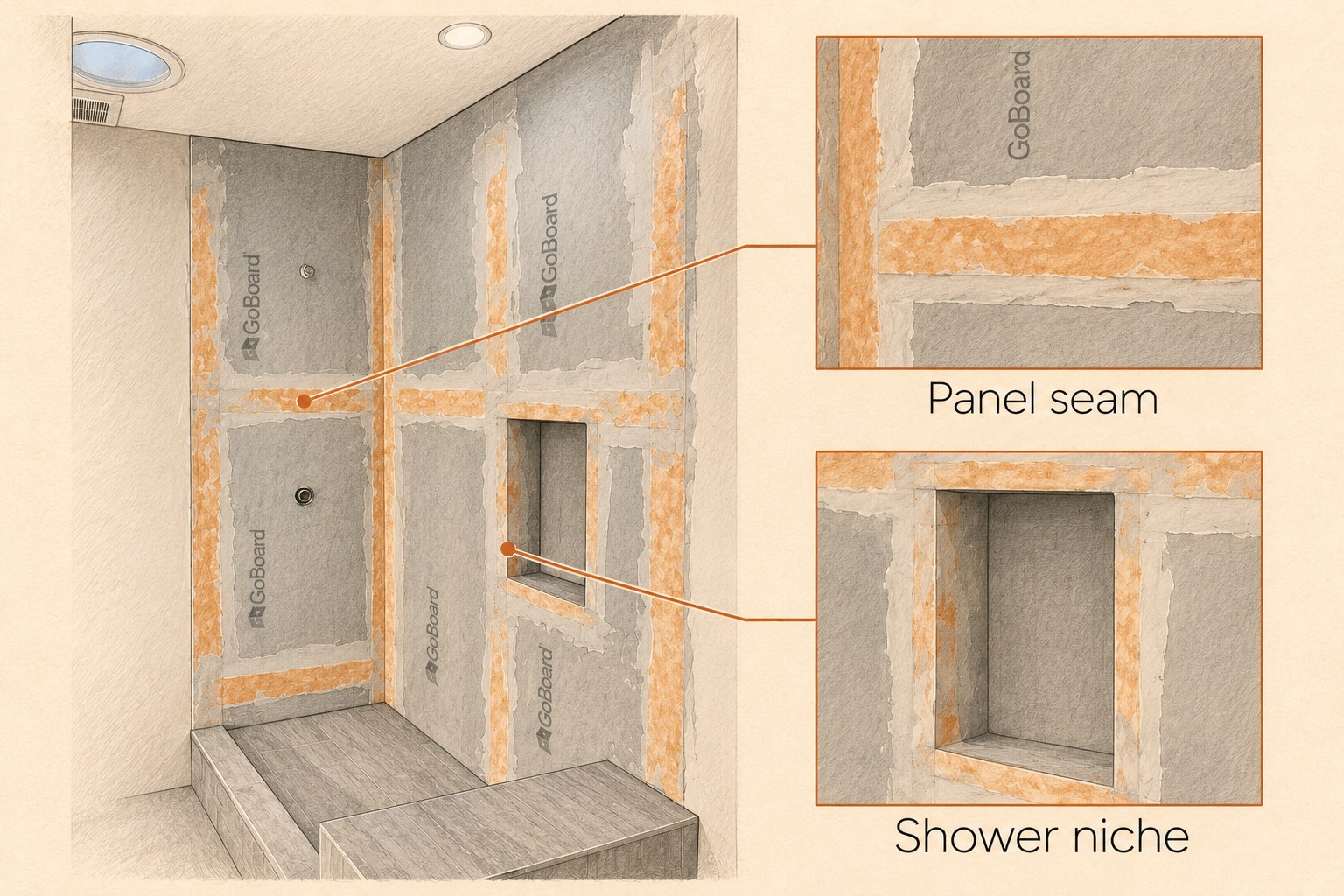
For a shower with a niche and a low entry, ask for photos of one comparable project at three stages: the open wall, the waterproofed shower and the finished room. Ask the person showing the pictures to point out where the waterproofing met the drain and who checked it before tile. For a kitchen backsplash, ask to see how they finished a window return or the exposed end of a wall like yours.
When checking references for a Placer County remodel in Roseville or Rocklin, try to speak with someone whose project involved the same detail. One question often gets a better answer than “Were you happy?” Try “Did anything change after demolition, and did you know the price before the extra work started?” Read recent reviews on more than one platform and look for repeated, specific experiences with scheduling, changes and follow-up.
3. What do you already know about the surface underneath?
Suppose you’ve picked 24-by-48-inch wall tiles. Ask where the installer will check the wall for flatness, what preparation the bid covers, and what would trigger an extra charge. “Prep included” leaves room for two quite different expectations. Filling a few small defects and straightening an entire wall take different amounts of work.
A specific answer might sound like this: “We can check the exposed wall today. Behind the old tile, we’ll know more after removal. If it needs more work than we’ve priced, we’ll show you where, give you the added cost and wait for written approval.” Have that agreement added to the estimate.
4. Which materials will you use, and what record will I keep?
On a shower bid, “waterproofing included” is a good place to start asking questions. Which system and drain are priced? Who installs the connections at the niche, curb and pipe openings? When will the pan be tested, and who will send you the result? Ask for product names, photos before tile, and the test record. Our shower flood-test guide explains what to look for in that record.
For purchases, distinguish the tile you select from the mortar, membrane, grout and trim used to install it. If you pay for materials by receipt, agree who orders them, how receipts will be shared, and who handles returns. If the bid contains an allowance, ask what quantity and unit price it assumes.
5. What would these two bids cost for the same work?
Here’s an illustrative comparison. Both bids cover the same shower area and tile labor. The homeowner buys the finish tile separately in both. Both also exclude new glass. Suppose you ask both contractors for the missing prices and get the following replies in writing.
| Scope | Bid A | Bid B |
|---|---|---|
| Starting price | $8,600 | $9,900 |
| Remove old tile and haul it away | +$1,200 | Included |
| Rebuild and waterproof the niche | +$450 | Included |
| Total for this scope | $10,250 | $9,900 |
Bid A looked $1,300 cheaper. With those two items included, Bid B is $350 cheaper. These figures illustrate the arithmetic. In your own comparison, leave a missing price marked “to confirm” until the contractor answers. A blank line is an open question. Counting it as zero can make the wrong bid look attractive.
6. What happens the day you uncover damage?
Picture the first morning of demolition. The pan comes out and the plywood below is soft. Before that morning arrives, agree who photographs the finding, who explains the repair and who can authorize it. Ask for the change in price and schedule in writing before additional work starts. Check how the payment schedule lines up with completed work so you can tell what each payment covers.
7. If something comes loose six months later, who do I contact?
Ask for the workmanship warranty in writing, including its duration, what it covers, exclusions and the contact for a service request. A product warranty and the installer’s promise can cover different parts of a repair. Ask specifically who would assess a loose tile and who would pay for removal and reinstallation if the claim is accepted. At handover, keep the warranty, product labels, care instructions and installation photos together.
A message to send both contractors
“We’d like to compare both estimates on the same scope. Please mark what’s included, what we supply and what is priced separately. Please name the preparation and waterproofing you’ve allowed for, who handles the glass and drain, and what we’ll receive before the tile covers the work. If demolition reveals damage, how will we approve the price and schedule change?”
If you already have estimates and want a second opinion, send them to Mi Audit My Remodel with a photo of the room and a note about what you want to keep. Point out the line that’s hardest to compare. That’s where we’ll start. If you’re in Lincoln, Granite Bay or Loomis and want us to look at the room in person, include your town when you write.